

An older adult care assessment is a crucial step for individuals or their families who are considering additional support for daily living. This assessment evaluates the specific needs of elderly individuals, ensuring that they receive the appropriate care and assistance to maintain their well-being and independence.
If you’re concerned about your loved one’s ability to manage everyday tasks, understanding the care assessment process is the first step towards finding the right support.
In this guide, we’ll explore what happens during an older adult care assessment, what you should expect, and how to prepare for the process.
What Is an Older Adult Care Assessment?
An older adult care assessment is a thorough evaluation designed to assess the health and social needs of elderly individuals. This assessment helps local councils, healthcare providers and care homes determine the level of support an individual requires. It involves a review of physical health, mental capabilities, daily living tasks and any additional assistance needed, such as home modifications or personal care support.
The primary goal of the assessment is to ensure that seniors receive the right care to help them live as independently as possible while maintaining a good quality of life.
What Happens During the Assessment?
The assessment process typically begins when you or a family member contacts the local council to request an evaluation of your loved one’s needs. The local council will then arrange for a trained social worker, occupational therapist or another care professional to conduct the assessment. Here’s what you can expect:
Initial Health Review for Seniors
The assessment starts with a health review for seniors that focuses on the individual’s medical condition, physical health and mobility. The assessor may ask questions about the person’s ability to manage everyday tasks such as dressing, cooking, cleaning and personal hygiene. They will also ask about the individual’s emotional and psychological well-being.
Assessing Elderly Needs for Daily Living
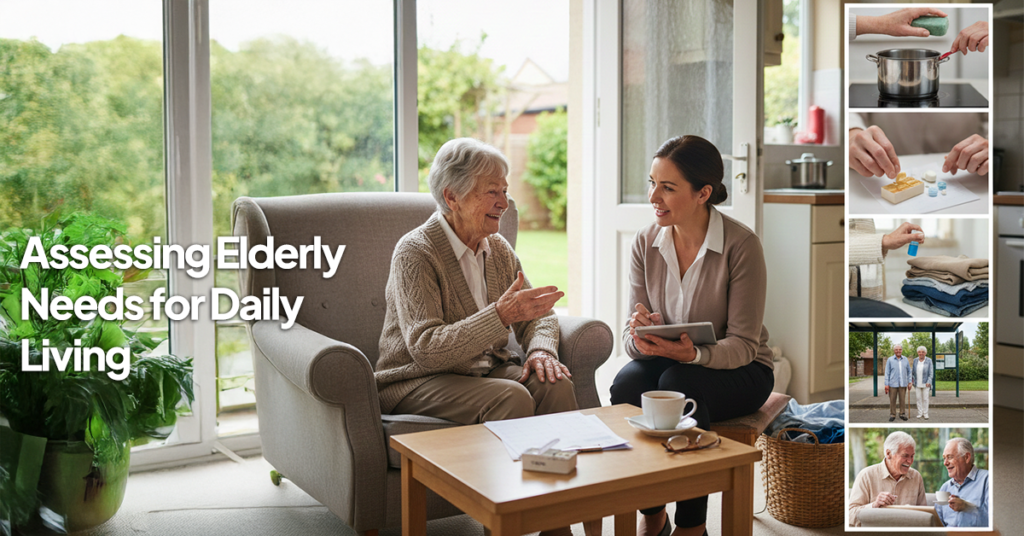
A significant portion of the assessment will focus on assessing elderly needs in terms of daily living activities. The assessor will evaluate whether the person can carry out basic functions such as:
- Bathing and grooming
- Preparing meals
- Managing medication
- Cleaning and laundry
- Going out for errands or appointments
- Socialising and maintaining relationships
The assessor may also ask questions about the person’s living environment. Suppose the home is not equipped to support the individual’s needs. In that case, a home adaptation assessment may follow to determine if changes are necessary, such as installing grab bars, a stairlift or a walk-in shower.
Face-to-Face, Online, or Self-Assessment Options

The care assessment can take place in several formats. While many prefer a face-to-face interview, especially for those with complex needs, the assessment can also occur over the phone or online. Some individuals may opt for a self-assessment if they are comfortable with the process.
How to Prepare for Your Assessment
Preparation is key to ensuring that all of the elderly person’s needs are properly assessed. Here are some ways to get ready:
- Provide Detailed Information: Think about the tasks that are most challenging, no matter how small. Whether it’s turning on the tap, getting out of bed or managing medications, the assessor will need to know the full extent of the difficulties faced.
- Have Someone With You: Bring a friend or family member to the assessment. This person can take notes, provide additional information or offer support during the interview.
- Document Needs: It’s helpful to keep a journal for a week leading up to the assessment. Note the tasks that are challenging and how often they occur. This helps provide a complete picture of the person’s daily needs.
What Happens After the Assessment?
Once the assessment is complete, the care planning process will begin. The local council will determine if the individual qualifies for support, based on their eligibility criteria. If care is needed, a care plan will be developed, outlining the type of support required, whether it’s home care assistance, day care services or even a move to a care home.
If you or your loved one needs financial assistance, the council will conduct a means test to assess how much the individual can contribute to their care costs.
Who Will Be Eligible for Help?
Eligibility for support is determined based on your ability to perform daily tasks. If the assessment identifies that you are unable to carry out key activities, such as eating, dressing or managing your home, you may qualify for assistance. The assessment will help the council determine the appropriate level of care and support, whether at home or in a care facility.
Why Marian House Is Your Trusted Partner in Older Adult Care

At Marian House, we understand that navigating the care planning process can be overwhelming. That’s why we provide detailed nursing support services to help you through each step. Our experienced team is committed to providing compassionate care and assisting with assessments, ensuring that your loved one receives the care they deserve.
If you’re looking for personalised care or need assistance with an older adult care assessment, reach out to us today at Marian House. We’re here to help!
FAQs
How long does an older adult care assessment take?
Typically, the assessment lasts about an hour, but it can take longer if there are more complex needs to consider. The process may also involve additional evaluations, such as home assessments.
Can someone accompany me during the assessment?
Yes, you can have a friend, family member or advocate attend the assessment to support you.
Is there a cost for the care needs assessment?
No, the older adult care assessment is free. However, if the assessment results in a care plan that includes services like home care or residential care, there may be costs associated, depending on the outcome of the financial assessment.
What happens if I disagree with the outcome of the assessment?
If you disagree with the decision made after the assessment, you have the right to request a review or make a formal complaint. The council should provide you with guidance on how to proceed.